
Every glass of water poured from a refrigerator dispenser carries an invisible record — a history of what the filter did or did not remove before that water reached your glass. For millions of American households, Project Source refrigerator water filters are the certified, budget-responsible answer to a question that should never go unanswered: Is the water my family is drinking actually clean? Project Source, the trusted private-label brand developed under the Lowe’s ecosystem, has systematically engineered a lineup of replacement refrigerator water filters that match or exceed the performance of OEM (original equipment manufacturer) alternatives — with independently verified certifications, rigorously tested filtration technology, and compatibility spanning the most widely owned refrigerator brands on the market today. Whether you own a GE French door model, a Hisense twin-door unit, or any number of other major appliances, this brand has built a filter specifically for your needs. This guide is structured for homeowners who make methodical purchasing decisions — the kind of decisions grounded in data, certifications, and transparent product comparisons rather than packaging promises. What follows is everything you need to know to select, purchase, install, and maintain the right Project Source refrigerator water filter for your home.
5 Most Popular Project Source Refrigerator Water Filters
The following five products represent the most in-demand models across major retail platforms, including Lowe’s, Walmart, eBay, and Instacart. Each entry includes a brief description, verified customer rating, and current price range to help you identify the correct filter quickly and with confidence.
1. Project Source PSGRP Refrigerator Water Filter (GE RPWFE Compatible)
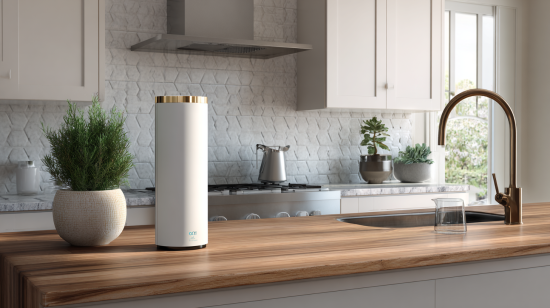
The PSGRP is Project Source’s flagship replacement filter for GE refrigerators equipped with the RPWFE push-in cartridge — one of the most installed filter formats in American kitchens. Engineered for seamless compatibility with GE Profile and GE Café series French door and side-by-side models, the PSGRP delivers premium-grade water and ice filtration without the premium-grade price tag. Using advanced coconut shell carbon block technology, it effectively reduces chlorine taste and odor, lead, cysts, and a broad spectrum of chemical contaminants, all while preserving the beneficial minerals naturally present in tap water. Installation is a straightforward push-in process that requires no tools, no plumbing knowledge, and less than five minutes of time.
Rating: Highly rated across verified retail platforms
Price Range: $29.99
2. Project Source H-1-2 Twist-In Refrigerator Water Filter 2-Pack (Hisense HX2017F-A Compatible)
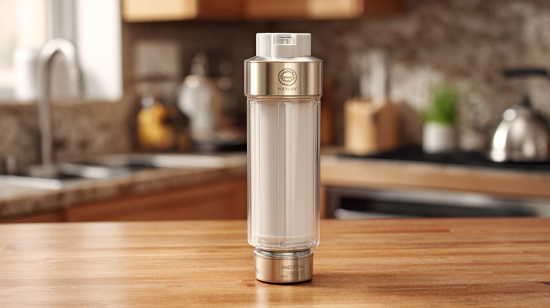
Designed as a certified direct replacement for Hisense filter models HX2017F-A and HX2017DR-A, the H-1-2 is among the most technically comprehensive filters in the entire Project Source lineup. Built around a 0.5 micron coconut shell carbon block, this filter achieves an extraordinarily fine particle barrier — capturing cysts, sediment, rust, and even microscopic contaminants that lower-grade filters routinely allow through. The H-1-2 has been independently certified to NSF/ANSI standards 42, 53, 372, 401, P473, and CSA B483.1, confirming its verified ability to reduce lead, mercury, asbestos, pharmaceuticals (including ibuprofen, naproxen, and phenytoin), BPA, PFOA, PFOS, endrin, trichlorobenzene, and P-dichlorobenzene. Each filter is rated for 300 gallons or six months of service and is sold in an economical 2-pack configuration. Made in the USA and packaged with eco-conscious coconut shell carbon rather than coal-derived alternatives, this filter also offsets the environmental equivalent of approximately 1,500 plastic water bottles per cartridge.
Rating: 4.6 out of 5 stars (5 verified ratings on Walmart)
Price Range: $22.00 for a 2-pack
3. Project Source Refrigerator Water Filter #3846776 (GE MWF SmartWater Compatible)
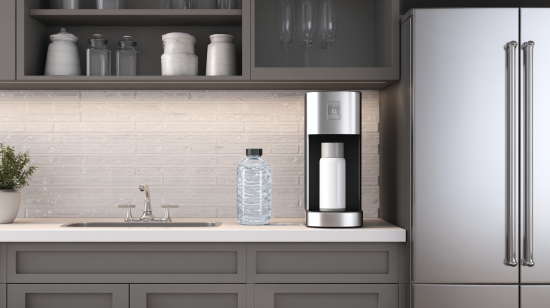
The #3846776 is Project Source’s answer to the iconic GE MWF SmartWater cartridge — one of the most widely distributed refrigerator filter formats in the United States, compatible with a broad range of GE side-by-side and top-freezer models spanning multiple decades of production. This carbon filter is designed for door-type installation and delivers reliable reduction of chlorine taste, odor, sediment, and the contaminants most commonly flagged by public health agencies. Buyers on eBay have responded with 100% positive seller feedback across verified purchases, citing accurate product descriptions, fast shipping, and new, undamaged packaging upon arrival. Available at a notable 29% discount from the original retail price, the #3846776 represents one of the most cost-effective entry points into the Project Source lineup for GE refrigerator owners.
Rating: 100% positive seller feedback (verified purchase history)
Price Range: $24.95 (discounted from original $34.95)
4. Project Source Push-In Refrigerator Water Filter (Lowe’s Exclusive Series)
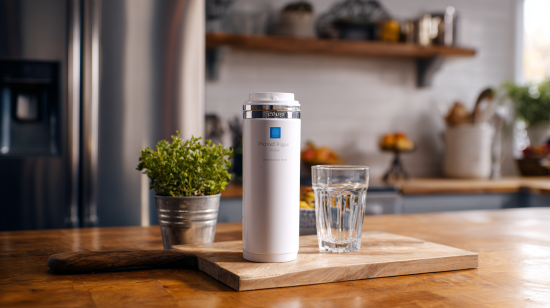
Available through Lowe’s retail and online channels, the Project Source push-in filter series is purpose-built for refrigerators that require a push-to-install cartridge format. These filters carry the same NSF/ANSI certification credentials that distinguish the broader Project Source lineup, ensuring that the contaminant reduction performance you expect is backed by verified third-party laboratory testing. The tool-free push-in mechanism makes this one of the fastest replacement experiences available in the residential filter market — a genuine advantage for homeowners managing busy households or maintaining multiple appliances on a regular replacement schedule. The push-in series is particularly well-suited to bulk buyers, rental property managers, and households that rotate filter brands and appreciate having a certified, widely available option with consistent availability at a national retailer.
Rating: Consistently well-reviewed across Lowe’s verified customer base
Price Range: $19.99–$29.99
5. Project Source 2-Pack 6-Month Twist Refrigerator Water Filter (Model 12)
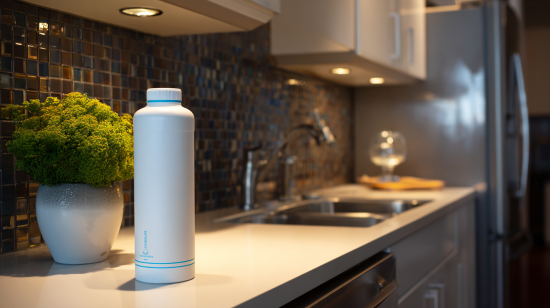
The twist-in Model 12 2-pack is the go-to choice for homeowners who prioritize value purchasing and a predictable replacement schedule. Each filter in this set is rated for six full months of filtered water delivery, with a twist-in installation design that creates a secure, leak-resistant seal every time — no over-tightening, no cross-threading, and no service concerns. The Model 12 uses the same coconut shell carbon block construction that underpins Project Source’s entire filter product range, meaning the 6-month water quality you receive with this filter reflects the same engineering investment as the brand’s more specialized models. Buying in a 2-pack format also means your next replacement is ready on hand the moment your current filter reaches its service limit, eliminating the common problem of delayed replacements due to out-of-stock situations or forgotten reorders.
Rating: Positively reviewed for ease of installation and purchase value
Price Range: $22.00–$27.99
Why Project Source Has Earned the Trust of Cost-Conscious Homeowners
In a consumer segment overwhelmed by generic, uncertified replacement filters making claims that no independent laboratory has ever bothered to verify, Project Source occupies a distinctly credible position. The brand is not sold as a premium luxury product, nor is it positioned as a discount gamble. It exists precisely in the space where rigorous product engineering meets accessible pricing — and that combination is unusually difficult to execute well.
The brand’s distribution across Lowe’s, Walmart, eBay, and Instacart is a meaningful indicator of market confidence. Products that earn shelf space and sustained consumer demand across that many major retail channels simultaneously are not there by chance. They are there because they consistently deliver on the performance expectations that bring buyers back at the six-month replacement interval, purchase after purchase, year after year.
Project Source filters are designed for homeowners who expect professional-grade water quality without paying a professional-grade markup. The engineering is real. The certifications are independently awarded. The price advantage over comparable OEM alternatives typically ranges from 30% to 50%, depending on the specific model and purchase channel. For a household replacing filters twice per year, that savings compounds meaningfully over time.
The Science Behind the Filter: Coconut Shell Carbon Block Technology
Understanding what makes a refrigerator water filter effective requires understanding the material at its core. In the case of Project Source, that material is coconut shell activated carbon — and the choice is deliberate, scientifically justified, and environmentally significant.
Activated carbon is a material that has been treated to dramatically increase its internal surface area. A single gram of high-quality activated carbon can have a surface area equivalent to several tennis courts — millions of microscopic pores and channels that provide active sites where contaminant molecules can be captured and held. Coconut shell carbon, derived from the hard inner shells of coconuts rather than coal or wood, produces activated carbon with a particularly fine pore structure that is exceptionally well-suited to the contaminant profile found in residential tap water.
The 0.5 micron rating specified for Project Source’s H-1-2 filter — and similar specifications across the broader lineup — defines the minimum particle size the filter is capable of physically blocking. At 0.5 microns, the filter creates a barrier capable of capturing parasitic cysts including Cryptosporidium and Giardia, both of which are associated with waterborne gastrointestinal illness and which are small enough to pass through lower-grade filtration media. A human hair, for reference, is approximately 70 microns in diameter. The 0.5-micron threshold represents filtration at a scale approximately 140 times finer.
Beyond mechanical particle filtration, activated carbon works through adsorption — a process distinct from absorption in that contaminant molecules are attracted to and held on the surface of the carbon structure rather than being absorbed into it. This is the mechanism by which chlorine taste and odor, volatile organic compounds, pharmaceutical compounds, PFOA, PFOS, BPA, and other dissolved chemical contaminants are removed from the water passing through the filter. The carbon matrix acts simultaneously as a sponge for some contaminant types and as a magnet for others, capturing and retaining them within its structure while allowing clean water molecules to pass through.
Critically, coconut shell activated carbon does not remove beneficial minerals such as calcium, magnesium, potassium, and fluoride. These minerals are not only important for human health — they also contribute directly to the clean, neutral taste that distinguishes well-filtered water from the flat, stripped-down quality associated with reverse osmosis or over-filtered alternatives. Project Source filters are engineered to the standard that filtration science recommends: remove what harms, retain what helps.
Decoding NSF Certifications: What Every Number Means for Your Health
Project Source water filters are independently certified to NSF/ANSI standards 42, 53, 372, 401, and P473, as well as CSA B483.1. Each of these certification numbers represents a distinct category of performance testing, and understanding what they actually verify transforms them from abstract checkboxes into meaningful health guarantees.
NSF/ANSI Standard 42 governs aesthetic effects in drinking water — specifically the reduction of chlorine taste and odor, along with particulate matter. Certification to this standard confirms that the filter measurably improves the sensory quality of drinking water. This is the baseline standard that any quality replacement filter should carry.
NSF/ANSI Standard 53 is the health effects standard, and it is the most consequential certification for public health purposes. Achieving Standard 53 certification means the filter has been independently tested and verified to reduce specific health-related contaminants to levels below the regulatory thresholds established by the EPA and NSF. Contaminants addressed under this standard include lead, VOCs, cysts, MTBE, turbidity, and others directly associated with adverse health outcomes in humans.
NSF/ANSI Standard 372 addresses lead-free compliance at the material level. This standard confirms that the filter itself — its housing, components, and media — does not introduce lead into the water it is treating. This is a structural safety standard that operates independently of filtration performance.
NSF/ANSI Standard 401 is among the most forward-looking certifications in the water filtration industry. It addresses emerging contaminants — substances not yet subject to federal regulatory limits but identified through ongoing scientific research as presenting potential health risks. This category includes pharmaceuticals, certain herbicides, and industrial chemicals that enter water supplies through environmental contamination pathways. The fact that Project Source carries this certification signals an organizational commitment to keeping pace with evolving water safety science rather than meeting only historical minimum requirements.
NSF/ANSI P473 specifically targets PFOA and PFOS — the class of synthetic fluorinated compounds now widely referred to as “forever chemicals.” These substances are persistent in the environment, bioaccumulate in human tissue, and have been associated in epidemiological research with thyroid disruption, immune system effects, and other health concerns. Regulatory attention to PFOA and PFOS has intensified significantly in recent years, and a filter certified under P473 addresses this category of risk with verified performance data.
CSA B483.1 is the Canadian federal standard for drinking water treatment units, providing an additional layer of international third-party validation for Project Source’s performance claims.
Together, these certifications represent thousands of hours of independent laboratory testing conducted by accredited bodies with no commercial relationship to Project Source. Every filter carrying these marks has been subjected to controlled challenge testing — meaning known concentrations of target contaminants are introduced upstream of the filter under specified flow conditions, and the filter’s output is measured and verified to confirm the claimed reduction rates are consistently achieved.
Compatibility: Matching the Right Filter to Your Refrigerator
The most critical step in the purchasing process is confirming compatibility between your refrigerator and the Project Source filter model you are considering. Project Source designs each filter to map directly to specific OEM model numbers, which makes the verification process straightforward once you know where to look.
The PSGRP filter is compatible with GE refrigerators that use the RPWFE push-in cartridge format. This includes GE Profile and GE Café series French door models, as well as select GE side-by-side configurations produced in recent manufacturing cycles.
The H-1-2 filter is a certified direct replacement for Hisense filter models HX2017F-A and HX2017DR-A. Hisense has grown rapidly as a refrigerator brand in the North American market over the past decade, and the availability of a fully certified third-party replacement at the H-1-2’s price point represents a genuine benefit for Hisense owners who have historically encountered limited aftermarket filter options.
The #3846776 filter serves the GE MWF SmartWater format — one of the most broadly distributed cartridge types in the United States, compatible with a wide range of GE refrigerator models spanning both current and legacy production lines.
Before purchasing, always verify compatibility by checking the model number printed directly on your currently installed filter cartridge. This number can also be found in your refrigerator’s owner’s manual under the filter replacement section. The existing cartridge model number is the most reliable compatibility reference and takes precedence over appliance model numbers, which may support multiple filter formats across production variants.
Installation and Replacement: The Tool-Free DIY Process in Practice
Every Project Source refrigerator water filter is engineered for tool-free DIY installation — a design philosophy that eliminates the cost and inconvenience of professional service for what is a routine maintenance task. The replacement process is designed to be completed in under five minutes by any adult homeowner, regardless of technical background.
For twist-in models such as the H-1-2 and Model 12, the procedure involves locating the filter housing within the refrigerator compartment (typically positioned in the upper interior), rotating the existing filter counterclockwise to disengage it, inserting the new filter, and turning it clockwise until it seats firmly in the locked position. After installation, running two to three gallons of water through the new filter before consumption is standard practice to flush residual carbon particles from the manufacturing process.
For push-in models such as the PSGRP, installation is even more streamlined. A release button on the filter housing ejects the old cartridge. The replacement filter is aligned with the housing inlet and pushed firmly into place until an audible click confirms a secure, sealed connection.
Following installation, resetting the refrigerator’s filter change indicator is the final step. The majority of GE, Hisense, and other major brand refrigerators include a filter reset function accessible via the control panel, typically requiring a three-to-five-second press of a designated reset button. Consult your appliance’s owner’s manual for the exact reset sequence specific to your model.
Understanding the 6-Month Replacement Cycle
Project Source recommends replacing your refrigerator water filter every six months or every 300 gallons of filtered water — whichever threshold is reached first. This recommendation is grounded in the physical chemistry of activated carbon adsorption capacity, not in a manufacturer’s interest in increasing sales frequency.
Activated carbon has a finite number of active adsorption sites. Over time and with continued water flow, those sites become occupied by captured contaminants, and the carbon’s capacity to continue removing new contaminants diminishes progressively. A filter that has exceeded its service capacity may appear physically unchanged from the outside while being functionally unable to provide the filtration performance for which it was certified.
For households with higher daily water consumption — families with children, homes where refrigerator water is used for cooking, hydration, and pet watering — the 300-gallon threshold may be reached in fewer than six months. In these cases, total volume consumed is the more relevant replacement trigger. For lower-consumption single or two-person households, the six-month calendar interval typically serves as the practical guide.
The Environmental Impact of Choosing Project Source
Each Project Source filter is designed to replace up to 1,500 single-use plastic water bottles. This figure is derived from the filter’s 300-gallon capacity divided by the average 8-ounce serving size of single-use bottled water. For a household replacing filters on the standard twice-yearly schedule, this translates to approximately 3,000 plastic bottles diverted from the waste stream annually.
The choice of coconut shell carbon over coal-based carbon alternatives compounds this environmental benefit. Coconut shells are an agricultural byproduct — a renewable, sustainably harvested material that would otherwise be discarded. Coal-derived activated carbon carries a heavier extraction and processing footprint and is associated with a fossil fuel production chain. By specifying coconut shell carbon across its lineup, Project Source has made an engineering decision that aligns with responsible sourcing practices without compromising filtration performance.
Where to Buy: Platform-by-Platform Guide
Project Source refrigerator water filters are available through a strategically distributed multi-channel retail network, ensuring that regardless of your preferred shopping method, the filter you need is accessible.
Lowe’s is the primary home for the complete Project Source filter lineup, offering the widest range of compatible models available both in-store and online. Same-day in-store availability makes Lowe’s the most reliable option when a filter needs to be replaced immediately.
Instacart partners with Lowe’s to offer same-day delivery of Project Source filters directly to your home. Delivery fees start at $3.99 for same-day orders exceeding $35, with new customers eligible for $0 delivery fees on their first three orders — making it a genuinely cost-competitive option for time-pressed homeowners.
Walmart carries select Project Source models online, including the H-1-2 2-pack at $22.00, with standard shipping fulfillment options for customers who prefer consolidated online shopping.
eBay provides access to individual and multi-pack Project Source filters through vetted third-party sellers, including the #3846776 GE MWF-compatible model at a current price of $24.95 — representing a 29% discount from the standard retail price. Sellers with 100% positive feedback and verified purchase histories make eBay a viable and cost-effective secondary purchasing channel.
Conclusion: A Purchase Decision Backed by Science and Savings
The evaluation criteria for any refrigerator water filter ultimately reduces to a set of non-negotiable requirements: certified contaminant reduction, broad refrigerator compatibility, straightforward installation, and a price that makes consistent six-month replacement financially sustainable over the long term. Project Source refrigerator water filters satisfy all four requirements with documented evidence to support each claim.
The NSF/ANSI certifications are not self-reported — they are independently awarded following rigorous third-party laboratory challenge testing. The coconut shell carbon block technology is scientifically established as the superior medium for residential drinking water filtration. The compatibility range covers the most widely owned refrigerator brands in American homes. The pricing delivers a 30% to 50% advantage over comparable OEM alternatives without degrading the filtration performance those alternatives provide.
Choosing the right refrigerator water filter is not a trivial household decision — it is a daily health commitment made on behalf of everyone in your home. With Project Source, that commitment is supported by certified science, accessible retail distribution, and a track record of consistent consumer satisfaction. When the filter light comes on next month, the choice is already made.